Top Menu

Tampilkan postingan dengan label mammoth. Tampilkan semua postingan

Studi meragukan dari dampak kosmik yang pembunuh mammoth --T-REC-komunitas rfeptil-semarang--KSE-komunitas satwa eksotik

09.31
SILAHKAN MENGGUNAKAN " MESIN TRANSLATE "..GOOGLE TRANSLATE 
DISAMPING KANAN INI............. 

PLEASE USE ........ "TRANSLATE MACHINE" .. GOOGLE TRANSLATE BESIDE RIGHT THIS

................. 


T-REC -TUGUMUDA REPTILES COMMUNITY-INDONESIA

 
More info :
minat gabung : ( menerima keanggotaan seluruh kota dan daerah di Indonesia )
08995557626
..................................
KSE – KOMUNITAS SATWA EKSOTIK – EXOTIC PETS COMMUNITY-- INDONESIA
Visit Our Community and Joint W/ Us....Welcome All Over The World
 KSE = KOMUNITAS SATWA EKSOTIK

MENGATASI KENDALA MINAT DAN JARAK

KAMI ADA DI TIAP KOTA DI INDONESIA 

GABUNG......... ( menerima keanggotaan seluruh kota dan daerah di Indonesia )
HUBUNGI   :  089617123865

.........................


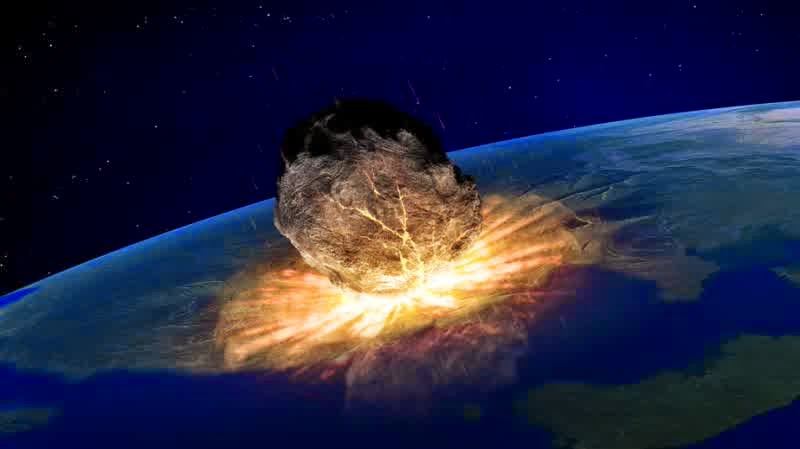
Studi meragukan dari dampak kosmik yang pembunuh mammoth 


tetesan batu tanah  yang dibentuk oleh pemanasan yang kemungkinan berasal dari house fire zaman batu  dan bukan dari petaka kosmik 12.900 tahun yang lalu, menurut penelitian baru. Studi tanah dari Suriah , terbaru untuk mendiskreditkan teori kontroversial bahwa dampak kosmis yang dipicu the younger dryas diperiode dingin bumi .....read more


Study casts doubt on mammoth-killing cosmic impact
Date:
January 6, 2015
Source:
University of California - Davis
Summary:
Rock soil droplets formed by heating most likely came from Stone Age house fires and not from a disastrous cosmic impact 12,900 years ago, according to new research. The study, of soil from Syria, is the latest to discredit the controversial theory that a cosmic impact triggered the Younger Dryas cold period.
.....................
rock soil droplets formed by heating most likely came from Stone Age house fires and not from a disastrous cosmic impact 12,900 years ago, according to new research from the University of California, Davis. The study, of soil from Syria, is the latest to discredit the controversial theory that a cosmic impact triggered the Younger Dryas cold period.
The Younger Dryas lasted a thousand years and coincided with the extinction of mammoths and other great beasts and the disappearance of the Paleo-Indian Clovis people. In the 1980s, some researchers put forward the idea that the cool period, which fell between two major glaciations, began when a comet or meteorite struck North America.
In the new study, published online in the Journal of Archaeological Science, scientists analyzed siliceous scoria droplets -- porous granules associated with melting -- from four sites in northern Syria dating back 10,000 to 13,000 years ago. They compared them to similar scoria droplets previously suggested to be the result of a cosmic impact at the onset of the Younger Dryas.
"For the Syria side, the impact theory is out," said lead author Peter Thy, a project scientist in the UC Davis Department of Earth and Planetary Sciences. "There's no way that can be done."
The findings supporting that conclusion include:
·         The composition of the scoria droplets was related to the local soil, not to soil from other continents, as one would expect from an intercontinental impact.
·         The texture of the droplets, thermodynamic modeling and other analyses showed the droplets were formed by short-lived heating events of modest temperatures, and not by the intense, high temperatures expected from a large impact event.
·         And in a key finding, the samples collected from archaeological sites spanned 3,000 years. "If there was one cosmic impact," Thy said, "they should be connected by one date and not a period of 3,000 years."
So if not resulting from a cosmic impact, where did the scoria droplets come from? House fires. The study area of Syria was associated with early agricultural settlements along the Euphrates River. Most of the locations include mud-brick structures, some of which show signs of intense fire and melting. The study concludes that the scoria formed when fires ripped through buildings made of a mix of local soil and straw.

Story Source:
The above story is based on materials provided by University of California - Davis.Note: Materials may be edited for content and length.

Journal Reference:
1.    P. Thy, G. Willcox, G.H. Barfod, D.Q. Fuller. Anthropogenic origin of siliceous scoria droplets from Pleistocene and Holocene archaeological sites in northern Syria. Journal of Archaeological Science, 2015; 54: 193 DOI:10.1016/j.jas.2014.11.027


Perilaku Mammoth dan mastodon berkeliaran berkurang--T-REc semarang--komunitas reptil semarang

 ..SILAHKAN MENGGUNAKAN " MESIN TRANSLATE "..GOOGLE TRANSLATE 
DISAMPING KANAN INI.............


PLEASE USE ........ "TRANSLATE MACHINE" .. GOOGLE TRANSLATE BESIDE RIGHT THIS

..................
 
 
Perilaku Mammoth dan mastodon  berkeliaran berkurang


Jenggot mereka berantakan tidak ironis, tetapi ada alasan Mammoth dan Mastodon dari hipsters zaman es. Menurut penelitian baru, kerabat terkenal gajah suka tinggal di Greater Cincinnati lama sebelum ...--pada akhir zaman es. Sebuah penelitian baru menunjukkan Proboscidea menikmati sebagai  penduduk tetap  sepanjang tahun dan tidak berpindah-pindah migran seperti sebelumnya terpikirkan.


Mammoth and mastodon behavior was less roam, more stay at home
Date:
July 21, 2014
Source:
University of Cincinnati
Summary:
Their scruffy beards weren't ironic, but there are reasons mammoths and mastodons could have been the hipsters of the Ice Age. According to new research, the famously fuzzy relatives of elephants liked living in Greater Cincinnati long before it was trendy -- at the end of the last ice age. A new study shows the ancient proboscideans enjoyed the area so much they likely were year-round residents and not nomadic migrants as previously thought.
..................
Their scruffy beards weren't ironic, but there are reasons mammoths and mastodons could have been the hipsters of the Ice Age.
According to research from the University of Cincinnati, the famously fuzzy relatives of elephants liked living in Greater Cincinnati long before it was trendy -- at the end of the last ice age. A study led by Brooke Crowley, an assistant professor of geology and anthropology, shows the ancient proboscideans enjoyed the area so much they likely were year-round residents and not nomadic migrants as previously thought.
They even had their own preferred hangouts. Crowley's findings indicate each species kept to separate areas based on availability of favored foods here at the southern edge of the Last Glacial Maximum's major ice sheet.
"I suspect that this was a pretty nice place to live, relatively speaking," Crowley says. "Our data suggest that animals probably had what they needed to survive here year-round."
Could the past save the future?
Crowley's research with co-author and recent UC graduate Eric Baumann, "Stable Isotopes Reveal Ecological Differences Among Now-Extinct Proboscideans from the Cincinnati Region, USA," was recently published in Boreas, an international academic research journal.
Learning more about the different behaviors of these prehistoric creatures could benefit their modern-day cousins, African and Asian elephants. Both types are on the World Wildlife Fund's endangered species list. Studying how variable different types of elephants might have been in the past, Crowley says, might help ongoing efforts to protect these largest of land mammals from continued threats such as poaching and habitat destruction.
"There are regionally different stories going on," Crowley says. "There's not one overarching theme that we can say about a mammoth or a mastodon. And that's becoming more obvious in studies people are doing in different places. A mammoth in Florida did not behave the same as one in New York, Wyoming, California, Mexico or Ohio."
 The wisdom in teeth
For their research, Crowley and Baumann looked to the wisdom in teeth -- specifically museum specimens of molars from four mastodons and eight mammoths from Southwestern Ohio and Northwestern Kentucky. Much can be revealed by carefully drilling a tooth's surface and analyzing the stable carbon, oxygen and strontium isotopic signatures in the powdered enamel.
Each element tells a different story. Carbon provides insight into an animal's diet, oxygen relates to overall climatic conditions of an animal's environment and strontium indicates how much an animal may have traveled at the time its tooth was forming.
"Strontium reflects the bedrock geology of a location," Crowley says. "So if a local animal grows its tooth and mineralizes it locally and dies locally, the strontium isotope ratio in its tooth will reflect the place where it lived and died. If an animal grows its tooth in one place and then moves elsewhere, the strontium in its tooth is going to reflect where it came from, not where it died."
Their analysis allowed them to determine several things:
  • Mammoths ate more grasses and sedges than mastodons, which favored leaves from trees or shrubs.
  • Strontium from all of the animals (except one mastodon) matched local water samples, meaning they likely were less mobile and migratory than previously thought.
  • Differences in strontium and carbon between mammoths and mastodons suggest they didn't inhabit the same localities.
  • Mammoths preferred to be closer to the retreating ice sheet where grasses were more abundant, whereas mastodons fed farther from the ice sheet in more forested habitat.
"As a geologist, questioning the past is one of the most interesting and exciting things to do," says Baumann, an environmental geologist with a contractor for the U.S. Environmental Protection Agency. "Based on our data, mammoths and mastodons seemed to have different diets and lived in different areas during their lives. This is important because it allows us to understand how species in the past lived and interacted. And the past is the key to the present."

Story Source:
The above story is based on materials provided by University of Cincinnati. The original article was written by Tom Robinette. Note: Materials may be edited for content and length.

Journal Reference:
  1. Eric J. Baumann, Brooke E. Crowley. Stable isotopes reveal ecological differences amongst now-extinct proboscideans from the Cincinnati region, USA. Boreas, 2014; DOI: 10.1111/bor.12091


Designed By OddThemes | Distributed By Gooyaabi Templates